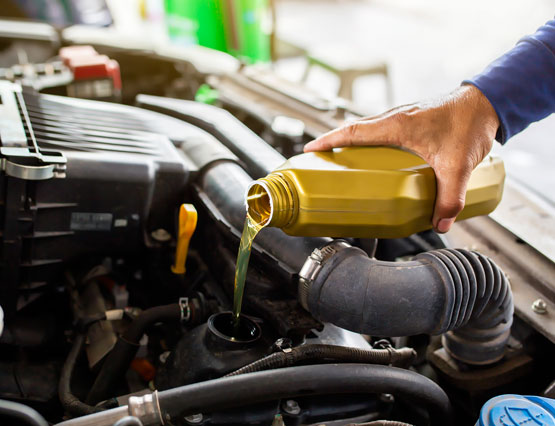

Certainly! The quality of engine oil can make a significant difference in the performance and lifespan of a vehicle’s engine.
Using low-quality or contaminated engine oil can lead to a number of problems, including reduced lubrication, increased wear and tear on engine parts, and even engine failure. On the other hand, using high-quality engine oil that is appropriate for your vehicle can help to extend the life of your engine and keep it running smoothly.
One of the primary functions of engine oil is to lubricate the moving parts of the engine. This helps to reduce friction and wear on parts, which can extend the life of the engine and improve its performance. Low-quality oil may not lubricate as well as high-quality oil, which can lead to increased wear and tear on the engine.
Contaminated oil can also be a problem. If the oil becomes contaminated with dirt, debris, or other substances, it can cause damage to the engine. This is why it is important to change your oil on a regular basis and to use a high-quality oil filter to help keep the oil clean.
In addition to these factors, the type of oil you use can also make a difference. Most vehicles require a specific type of oil, such as conventional oil, synthetic oil, or a blend of the two. Using the wrong type of oil can lead to problems with the engine.
Overall, it is important to use high-quality engine oil that is appropriate for your vehicle in order to help extend the life of your engine and keep it running smoothly. It is also important to change the oil on a regular basis and to use a high-quality oil filter to help keep the oil clean.
There are a few additional points to consider when it comes to the quality of engine oil and its impact on a vehicle’s engine.
One of these points is the viscosity of the oil. Viscosity refers to the oil’s ability to flow. Oil with a high viscosity, or thickness, may not flow as easily as a thinner oil, which can cause problems in the engine. For example, a thick oil may not be able to reach all of the engine’s moving parts, which can lead to reduced lubrication and increased wear and tear. On the other hand, an oil that is too thin may not provide sufficient protection for the engine, especially under high temperatures or heavy loads.
Another factor to consider is the oil’s ability to resist breakdown or oxidation. As the oil is used, it can break down over time due to heat and other factors. This can lead to the formation of sludge and other contaminants, which can cause problems in the engine. High-quality oils are formulated to resist breakdown and minimize the formation of contaminants, which can help to extend the life of the engine.
It is also worth noting that some high-quality oils are formulated with additional additives that can provide additional benefits for the engine. For example, some oils contain detergents and dispersants that can help to keep the engine clean and prevent the build-up of contaminants. Other oils may contain friction-reducing additives that can help to improve the engine’s efficiency and performance.

